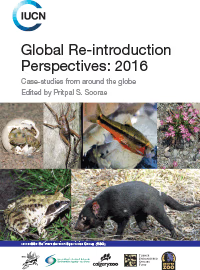
Case study · 2016
A trial re-introduction of the western quoll into the Flinders Ranges National Park, South Australia
From Global Conservation Translocation Perspectives (2016). Browse all case studies.
Summary
The western quoll (Dasyurus geoffroii), once found across 70% of mainland Australia but reduced by habitat clearance and introduced predators to a single Western Australian population, was the subject of a 2014 reintroduction trial into South Australia's Flinders Ranges National Park, jointly managed by the state government and Adnyamathanha traditional owners. The project, a partnership between the Department for Environment, Water and Natural Resources, the Foundation for Australia's Most Endangered Species and Western Australia's Department of Parks and Wildlife, benefited from years of existing fox control and feral goat removal under the park's Bounceback program, with camera traps confirming foxes were largely absent before release was approved. Quolls captured in Western Australia over three weeks were housed individually, flown thousands of kilometres, and released in two cohorts, 41 animals in April/May 2014 and 37 more in May 2015, using varied methods including soft-release pens and staggered male-then-female releases to reduce dispersal, all radio-collared and tracked by aircraft and ground crews for up to six months. Monitoring found over 50% survival in the first three months, successful breeding to pouch exit, and population growth exceeding 10% with second-generation recruits within three years, though roughly 33% of released quolls were lost to feral cat predation, which lacked an existing control program and required additional funding. The project rates itself successful, crediting a committed multi-partner team, the species' adaptable diet and predator-avoiding semi-arboreal habits, decades of accumulated translocation experience, and early evidence quolls can sometimes evade cats, while flagging ongoing cat control as essential to long-term establishment.